Learn for free...
Games
All our sites
Tous nos sites
Lessons
7,000+ lessons & exercises
Extra large lessons
Grammar sheets
Irregular verbs
Placement tests
Vocabulary sheets
Weekly worksheet
With audio/video files
Club
Bookmark the site
Chat rooms
Contribute
Forum
Members Area
Guestbook
My marks
My private messages
My account
My penpals
Recommend
Report a bug
Test builders
Useful
Audrey, read!
Break time!
Conjugate a verb
CONTEST
For kids
Games
Listen to 21,000 words
Record your voice
Spellchecker
Today's page
Translate
Instant translation
All our tools
Please log in!
Remember me
I've lost my password
2 million accounts created!
JOIN
our free club and learn English now!
Radio
News (US)
News (GB)
Live (US)
Live (GB)
Music (US)
Special English
Special E scripts
Home
Print
Guestbook
Report a bug
GREAT!
Get a free English lesson every week! Almost 2 MILLION subscribers!
Click here!
Recommended:
>
Language Resources
>
Sites for teachers
>
Other sites for teachers
>
English translator
Learn English
>
English lessons and exercises
> English test #15549: Anatomy : The Respiratory System
> Other English exercises on the same topic:
Human body
[
Change theme
]
> Similar tests: -
Human body
-
Parts of Body
-
Human body-Vocabulary A1
-
Vocabulary: the human body
-
Health at home-Vocabulary
-
Face (our)
-
Human skeleton
-
Vocabulary : internal organs & human body
>
Double-click
on words you don't understand
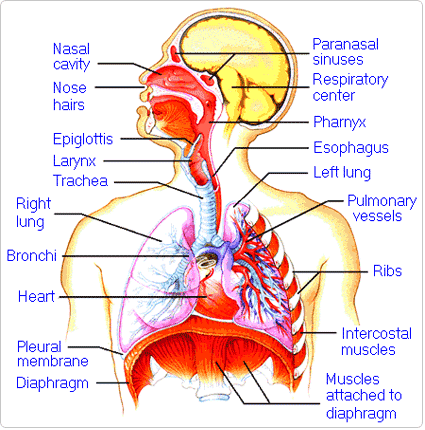
Anatomy : The Respiratory System
Find The right answer
English exercise "Anatomy : The Respiratory System" created by
bridg
with
The test builder
Click here to see the current stats of this English test
[
Save
] [
Load
] [
?
]
1. The two main air passages into the lungs.
Paranasal sinuses
Esophagus
Trachea
Epiglottis
Diaphragm
Bronchi
Heart
Pleural membrane
Lungs
Nose hairs
Nasal cavity
Larynx
Pulmonary vessels
Ribs
Respiratory center:
Muscles attached to the diaphragm
Pharynx
Intercostal muscles
2. Voice box.
Paranasal sinuses
Esophagus
Trachea
Epiglottis
Diaphragm
Bronchi
Heart
Pleural membrane
Lungs
Nose hairs
Nasal cavity
Larynx
Pulmonary vessels
Ribs
Respiratory center:
Muscles attached to the diaphragm
Pharynx
Intercostal muscles
3. Covering the lung and lining the chest cavity, this membrane has 2 thin layers.
Paranasal sinuses
Esophagus
Trachea
Epiglottis
Diaphragm
Bronchi
Heart
Pleural membrane
Lungs
Nose hairs
Nasal cavity
Larynx
Pulmonary vessels
Ribs
Respiratory center:
Muscles attached to the diaphragm
Pharynx
Intercostal muscles
4. Air spaces within the skull.
Paranasal sinuses
Esophagus
Trachea
Epiglottis
Diaphragm
Bronchi
Heart
Pleural membrane
Lungs
Nose hairs
Nasal cavity
Larynx
Pulmonary vessels
Ribs
Respiratory center:
Muscles attached to the diaphragm
Pharynx
Intercostal muscles
5. Area of the brain that controls breathing.
Paranasal sinuses
Esophagus
Trachea
Epiglottis
Diaphragm
Bronchi
Heart
Pleural membrane
Lungs
Nose hairs
Nasal cavity
Larynx
Pulmonary vessels
Ribs
Respiratory center:
Muscles attached to the diaphragm
Pharynx
Intercostal muscles
6. Interior area of the nose; lined with a sticky mucous membrane and contains tiny, surface hairs called cilia.
Paranasal sinuses
Esophagus
Trachea
Epiglottis
Diaphragm
Bronchi
Heart
Pleural membrane
Lungs
Nose hairs
Nasal cavity
Larynx
Pulmonary vessels
Ribs
Respiratory center:
Muscles attached to the diaphragm
Pharynx
Intercostal muscles
7. These muscles help move the diaphragm up and down for breathing.
Paranasal sinuses
Esophagus
Trachea
Epiglottis
Diaphragm
Bronchi
Heart
Pleural membrane
Lungs
Nose hairs
Nasal cavity
Larynx
Pulmonary vessels
Ribs
Respiratory center:
Muscles attached to the diaphragm
Pharynx
Intercostal muscles
8. Bones attached to the spine and central portion of the breastbone, which support the chest wall and protect the heart, lungs, and other organs in the chest.
Paranasal sinuses
Esophagus
Trachea
Epiglottis
Diaphragm
Bronchi
Heart
Pleural membrane
Lungs
Nose hairs
Nasal cavity
Larynx
Pulmonary vessels
Ribs
Respiratory center:
Muscles attached to the diaphragm
Pharynx
Intercostal muscles
9. The main muscle used for breathing; separates the chest cavity from the abdominal cavity.
Paranasal sinuses
Esophagus
Trachea
Epiglottis
Diaphragm
Bronchi
Heart
Pleural membrane
Lungs
Nose hairs
Nasal cavity
Larynx
Pulmonary vessels
Ribs
Respiratory center:
Muscles attached to the diaphragm
Pharynx
Intercostal muscles
10. The muscular organ that pumps blood throughout the body.
Paranasal sinuses
Esophagus
Trachea
Epiglottis
Diaphragm
Bronchi
Heart
Pleural membrane
Lungs
Nose hairs
Nasal cavity
Larynx
Pulmonary vessels
Ribs
Respiratory center:
Muscles attached to the diaphragm
Pharynx
Intercostal muscles
11. Located at the entrance of the nose, these hairs trap large particles that are inhaled.
Paranasal sinuses
Esophagus
Trachea
Epiglottis
Diaphragm
Bronchi
Heart
Pleural membrane
Lungs
Nose hairs
Nasal cavity
Larynx
Pulmonary vessels
Ribs
Respiratory center:
Muscles attached to the diaphragm
Pharynx
Intercostal muscles
12. Thin sheets of muscle between each rib that expand (when air is inhaled) and contract (when air is exhaled).
Paranasal sinuses
Esophagus
Trachea
Epiglottis
Diaphragm
Bronchi
Heart
Pleural membrane
Lungs
Nose hairs
Nasal cavity
Larynx
Pulmonary vessels
Ribs
Respiratory center:
Muscles attached to the diaphragm
Pharynx
Intercostal muscles
13. A flap of cartilage that prevents food from entering the trachea (or windpipe).
Paranasal sinuses
Esophagus
Trachea
Epiglottis
Diaphragm
Bronchi
Heart
Pleural membrane
Lungs
Nose hairs
Nasal cavity
Larynx
Pulmonary vessels
Ribs
Respiratory center:
Muscles attached to the diaphragm
Pharynx
Intercostal muscles
14. Tube through which air passes from the nose to the lungs (also known as the windpipe).
Paranasal sinuses
Esophagus
Trachea
Epiglottis
Diaphragm
Bronchi
Heart
Pleural membrane
Lungs
Nose hairs
Nasal cavity
Larynx
Pulmonary vessels
Ribs
Respiratory center:
Muscles attached to the diaphragm
Pharynx
Intercostal muscles
15. The tube through which food passes from the mouth down into the stomach.
Paranasal sinuses
Esophagus
Trachea
Epiglottis
Diaphragm
Bronchi
Heart
Pleural membrane
Lungs
Nose hairs
Nasal cavity
Larynx
Pulmonary vessels
Ribs
Respiratory center:
Muscles attached to the diaphragm
Pharynx
Intercostal muscles
16. The throat.
Paranasal sinuses
Esophagus
Trachea
Epiglottis
Diaphragm
Bronchi
Heart
Pleural membrane
Lungs
Nose hairs
Nasal cavity
Larynx
Pulmonary vessels
Ribs
Respiratory center:
Muscles attached to the diaphragm
Pharynx
Intercostal muscles
17. Pulmonary arteries carry deoxygenated blood from the heart and lungs; pulmonary veins carry oxygenated blood back to the heart.
Paranasal sinuses
Esophagus
Trachea
Epiglottis
Diaphragm
Bronchi
Heart
Pleural membrane
Lungs
Nose hairs
Nasal cavity
Larynx
Pulmonary vessels
Ribs
Respiratory center:
Muscles attached to the diaphragm
Pharynx
Intercostal muscles
18. The two organs that extract oxygen from inhaled air and expel carbon dioxide in exhaled air.
Paranasal sinuses
Esophagus
Trachea
Epiglottis
Diaphragm
Bronchi
Heart
Pleural membrane
Lungs
Nose hairs
Nasal cavity
Larynx
Pulmonary vessels
Ribs
Respiratory center:
Muscles attached to the diaphragm
Pharynx
Intercostal muscles
End of the free exercise to learn English: Anatomy : The Respiratory System
A free English exercise to learn English.
Other English exercises on the same topic :
Human body
|
All our lessons and exercises
TOP
Learn for free...
Games
All our sites
Tous nos sites
> BEST RESOURCES:
PLACEMENT TEST
|
GUIDE
|
OUR BEST WORKSHEETS
|
Most popular
|
Contact us
> LESSONS AND TESTS:
-ing
|
AS or LIKE
|
Abbreviations and acronyms...
|
Adjectives
|
Adverbs
|
Agreement/Disagreement
|
Alphabet
|
Animals
|
Articles
|
Audio test
|
Be
|
BE, HAVE, DO, DID, WAS...
|
Banks, money
|
Beginners
|
Betty's adventures
|
Bilingual dialogues
|
Business
|
Buying in a shop
|
Capital letters
|
Cars
|
Celebrations: Thanksgiving, new year...
|
Clothes
|
Colours/Colors
|
Comparisons
|
Compound words
|
Conditional and hypothesis
|
Conjunctions
|
Contractions
|
Countries and nationalities
|
Dates, days, months, seasons
|
Dictation
|
Direct/Indirect speech
|
Diseases
|
Exclamative sentences!
|
False friends
|
Family
|
Films
|
Find the correct tense
|
Find the missing letter
|
Find the word
|
Food
|
Frequent mistakes
|
Future
|
Games
|
Gender
|
General
|
Geography, history, politics, literature...
|
Get
|
Grammar
|
Guide
|
Harry Potter
|
Have
|
Homonyms
|
How words are built
|
Human body
|
I like, I dislike
|
Idioms
|
Imperative
|
Impersonal
|
Infinitive
|
Introducing someone
|
Introducing someoneSports
|
Inversion
|
Irregular verbs
|
Jobs
|
Journeys
|
Linking words
|
Literature
|
Make or do?
|
Making portraits, describing
|
Mars
|
Matilda
|
Methodology
|
Modals
|
Movements
|
Music
|
Nature
|
Negation
|
Newspaper
|
Nouns
|
Numbers
|
Online activities
|
Opinions
|
Opposite words
|
Particles
|
Passive voice
|
Past
|
Past habits
|
Phone calls
|
Placement tests
|
Plural
|
Poems
|
Politeness
|
Prepositions
|
Present
|
Present participle
|
Present perfect
|
Plu perfect
|
Pronouns
|
Pronunciation
|
Punctuation
|
Quantities
|
Question Tags
|
Questions
|
Relative sentences
|
Say, tell or speak?
|
School
|
Several tests
|
Slang words, colloquial words
|
Snow
|
Songs
|
Speaking
|
Subject-Verb agreement
|
Subjunctive
|
Subordinate clauses
|
Suggesting
|
Synonyms
|
Tales
|
The Internet
|
The house
|
The weather
|
There is/There are
|
This or That?
|
To have someone do something
|
Towns
|
Translations
|
USA
|
United Kingdom
|
Video
|
Waiting for approval
|
What time is it?
|
With a lesson
|
Writing a letter
> ABOUT THIS SITE: Copyright
Laurent Camus
-
Learn more / Help / Contact
[
Terms of use
] [
Safety tips
]
Do not copy or translate - site protected by an international copyright
.
| Our English lessons and tests are 100% free but visitors must pay for Internet access.
Mesure d'audience ROI statistique webanalytics par