





 | > Other English exercises on the same topic: Speaking [Change theme] |
| > Similar tests: - Vocabulary: greeting people - Vocabulary: on the phone - On the phone - Interacting with someone - Conditional clauses - Dialogue : What time...? - Differences between Like and As - Eating out-Vocabulary | |
| > Double-click on words you don't understand |
Agreeing/disagreeing - English lesson
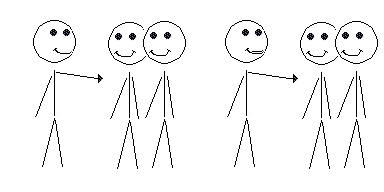

Expressing approval
| -Good! Excellent! Right! -Well done! - Perfect! -It looks / sounds pretty good! -I approve of (them / you ...) -What a success! -I'm all for it! -You couldn't have done better!
|

Expressing disapproval
| -You shouldn't do that. -You shouldn't have said so. -It's not very nice. -You can't do that! - It's an absolute disgrace! -I don't like what you do / have done / your friends ...
|

Inquiring about approval or disapproval
| -Is it all right? -Do you think this is all right? -Do you approve of this? -Do you approve of them doing that?
|

Expressing pleasure, liking
| -This is very nice / pleasant. -I like (very much) your dog / swimming ... -I love...x... / playing the piano ... -I'm fond of (music / walking ...) -I'm keen on (going abroad / the ideas ...) -He's crazy about (football / music ...)
|

Expressing displeasure, dislike
| -This is not very nice / pleasant. -I don't like (very much / at all) (that / getting early / them ..) -I hate (him / big cars / swimming ...) -What a horrible (smell / taste ...) -I'm not very fond of gardening / rock music ...) -I'm not very / really keen on (riding / dogs ...) -I can't stand (him / getting up early I can't bear (doing housework )
|

Expressing preference
| -I ou I'd prefer (a cup of ... / sleeping / to go to ...) -I'd rather (read that book / go alone ...) -I'd rather not (stay / walk / wait ...) -I'd sooner (do / not do ...) I like ( bananas ...)
|

Inquiring about preference
| -Which do you prefer? -Would you prefer (walking ...)? -Would you rather (go to the cinema...) rather than (walking / stay at home ...)?
|

Expressing indifference
| -I don't mind / I don't care. -It doesn't matter. -Who cares? -It's got nothing to do with me. -It's none of my business. -I have no preference.
|

Insisting
| -I'm sorry to insist but .... -I insist on (going over there / having a nap ...) -It's absolutely essential (you look at me ...) -It must be said that ... -What matters is to keep the receipt / to answer immediately
|

Expressing surprise
| -This is a surprise! -What a surprise! -It's surprising! -It's incredible! -It's impossible! -How very... (strange / surprising ...) -Isn't it / wasn't it (extraordinary...)? -It can't be true! / I can't believe it! -Well; I never! -How amazing!
|
Expressing regret , disappointment
| -That's a (great) pity / shame! -It's a pity / shame (it happened today / he couldn't do it...) -I'm very sorry (to have upset you ...) -I wish (you hadn't left so quickly / I'd stayed a little longer) -How I regret ( buying that bicycle ...) -I'm / I was very disappointed. -It is / it was a real blow. -It is / it was a great disappointment. -I had hoped (she'd come ... )
|

Expressing fear or worry
| -I'm afraid of cats. -I'm worried about Laurent / the money ... -I was (absolutely) terrified / (so) scared / terribly frightened. -The worrying / frightening thing is (he can't walk ...) -I was shaking with fear.
|
 Twitter Share
English exercise "Agreeing/disagreeing" created by bridg with The test builder. [More lessons & exercises from bridg]
Click here to see the current stats of this English test
 Please log in to save your progress.
End of the free exercise to learn English: Agreeing/disagreeing
A free English exercise to learn English.
Other English exercises on the same topic : Speaking | All our lessons and exercises
