Click here to go back to the homepage to learn English...
Please log in:


Remember me
I've lost my password


200,000 members!
JOIN our free club and learn English now!


  • Home
  • Print
  • Guestbook
  • Report a bug


  •  
    GREAT!
    Get a free English lesson every week! 150,000 subscribers!
    Click here!


    Recommended:
    > English translator
    > Sites for teachers
    > Other sites for teachers


    Must / Have to (English exercise n°29834 - Please quote this number when contacting us)


    Other English exercises on the same topic

    Must / Have to


                                                MUST                              HAVE TO


                         Must and have to are used to express obligation or the need to do something

                         they can be used interchangeably however


     ---MUST:    (subjective obligation)  in general expresses what the speaker thinks  is necessary

                     I must stop smoking  / We must go it's already midnight  /They must work harder


     __HAVE TO:   (objective obligation)  in general suggests that somebody else has imposed the decision

                         In France you have to drive on the right / Tom has to wear a uniform at school


     ----Tenses

                1° have to can be used in all tenses:

                          Tom had to wear a uniform last year  /  Tom will have to wear a uniform next year

                          Sonia is having to wait  / she may have to come back tomorrow

                2° must can be used to talk about the present or the future

                         Tom must call his mother tomorrow

                    but it can't be used to talk about the past  ( you use have to)

    ----Inerrogative form 

                           Do you have to leave now?    /   Must you leave right now?

    ----Negative form

                      The negative form of must and the negative form of have to are very different in meaning

              1° must not / mustn't   is used to say that something is not allowed

                      Children mustn't play with fire   /   Passengers must not talk to the driver  /  Visitors mustn't smoke 

                      'must not 'can't be used to talk about the past, you use another structure

                      example: we were not allowed to park near the museum

              2° don't have to  means that there is no obligation to do something, but you can do it if you want

                      you don't have to drink alcohol, you can have a soft drink

                      she doesn't have to arrive before 9

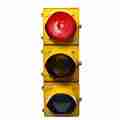
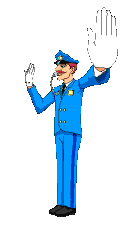
                                                      when the lights are red you must stop

                                                 you  have to stop

                                                                                           you mustn't go on 


    Intermediate
    English exercise "Must / Have to" created by lili73 (13-11-2007) with The test builder
    Click here to see the current stats of this English test


    1. To drive a car you have a driving licence.
    2. While you are driving you listen to the radio, it is not necessary.
    3. You drive without wearing a seatbelt.Wear a seatbelt is compulsory for the passengers too.
    4. It is dangerous to talk on a cell-phone and drive at the same time. Drivers do that.
    5. In some countries it is illegal to use a cell-phone in a car, in those countries drivers use phones in their cars.
    6. Drivers be kind to other drivers
    7. But they be kind to other drivers, it's a choice not the law.
    8. In France you insure your car, it's the law of the country.
    9. On the road you respect the speed limit even if there isn't any radar.
    10. Cyclists wear a helmet but a cautious rider should have one.


    End of the free exercise to learn English: Must / Have to (18.11.2009 14:53)
    A free English exercise to learn English.
    Other English exercises on the same topic | All our lessons and exercises

    TOP


    > BEST RESOURCES: PLACEMENT TEST | GUIDE | OUR BEST WORKSHEETS

    > LESSONS AND TESTS: -ing | AS or LIKE | Abbreviations and acronyms... | Adjectives | Adverbs | Agreement/Disagreement | Alphabet | Animals | Articles | Audio test | BE, HAVE, DO, DID, WAS... | Banks, money | Beginners | Betty's adventures | Bilingual dialogues | Business | Buying in a shop | Capital letters | Cars | Celebrations: Thanksgiving, new year... | Clothes | Colours/Colors | Comparisons | Compound words | Conditional and hypothesis | Conjunctions | Contractions | Countries and nationalities | Dates, days, months, seasons | Dictation | Direct/Indirect speech | Diseases | Etre | Exclamative sentences! | False friends | Family | Films | Find the correct tense | Find the missing letter | Find the word | Food | Frequent mistakes | Future | Games | Gender | General | Geography, history, politics, literature... | Get | Grammar | Guide | Harry Potter | Have | Homonyms | How words are built | Human body | I like, I dislike | Idioms | Imperative | Impersonal | Infinitive | Introducing someone | Introducing someoneSports | Inversion | Irregular verbs | Jobs | Journeys | Linking words | Literature | Make or do? | Making portraits, describing | Mars | Matilda | Methodology | Modals | Movements | Music | Nature | Negation | Newspaper | Nouns | Numbers | Online activities | Opinions | Opposite words | Particles | Passive voice | Past | Past habits | Phone calls | Placement tests | Plural | Poems | Politeness | Prepositions | Present | Present participle | Present perfect | Plu perfect| Pronouns | Pronunciation | Punctuation | Quantities | Question Tags | Questions | Relative sentences | Say, tell or speak? | School | Several tests | Slang words, colloquial words | Snow | Songs | Speaking | Subject-Verb agreement | Subjunctive | Subordinate clauses | Suggesting | Synonyms | Tales | The Internet | The house | The weather | There is/There are | This or That? | To have someone do something | Towns | Translations | USA | United Kingdom | Video | Waiting for approval | What time is it? | With a lesson | Writing a letter

    > ABOUT THIS SITE: Copyright Laurent Camus (ESL teacher) ... Learn more / Help / Contact [Terms of use] [Safety tips] Dop not copy or translate - site protected by an international copyright | | Our English lessons and tests are 100% free but visitors must pay for Internet access.